





 My Account

Commercial ceiling tile inspection checklist: Signs it’s time to replace
Commercial ceiling tile inspection checklist: Signs it’s time to replace
Ceiling tiles are easy to ignore-until they start creating visible problems, occupant complaints, or compliance issues. In commercial buildings, aging or damaged ceiling systems can impact everything from appearance and acoustics to indoor air quality and fire safety.
Whether you manage an office, healthcare facility, school, retail space, or industrial property, routine ceiling inspections can help you catch small issues before they become expensive repairs or liability concerns.
This commercial ceiling tile inspection checklist walks through the most common warning signs that indicate it may be time to replace your ceiling tiles.
Visual signs your ceiling tiles need to be replaced

These are the easiest issues to identify during a routine walkthrough. If your facility team or maintenance staff notices any of the following, replacement should be strongly considered.
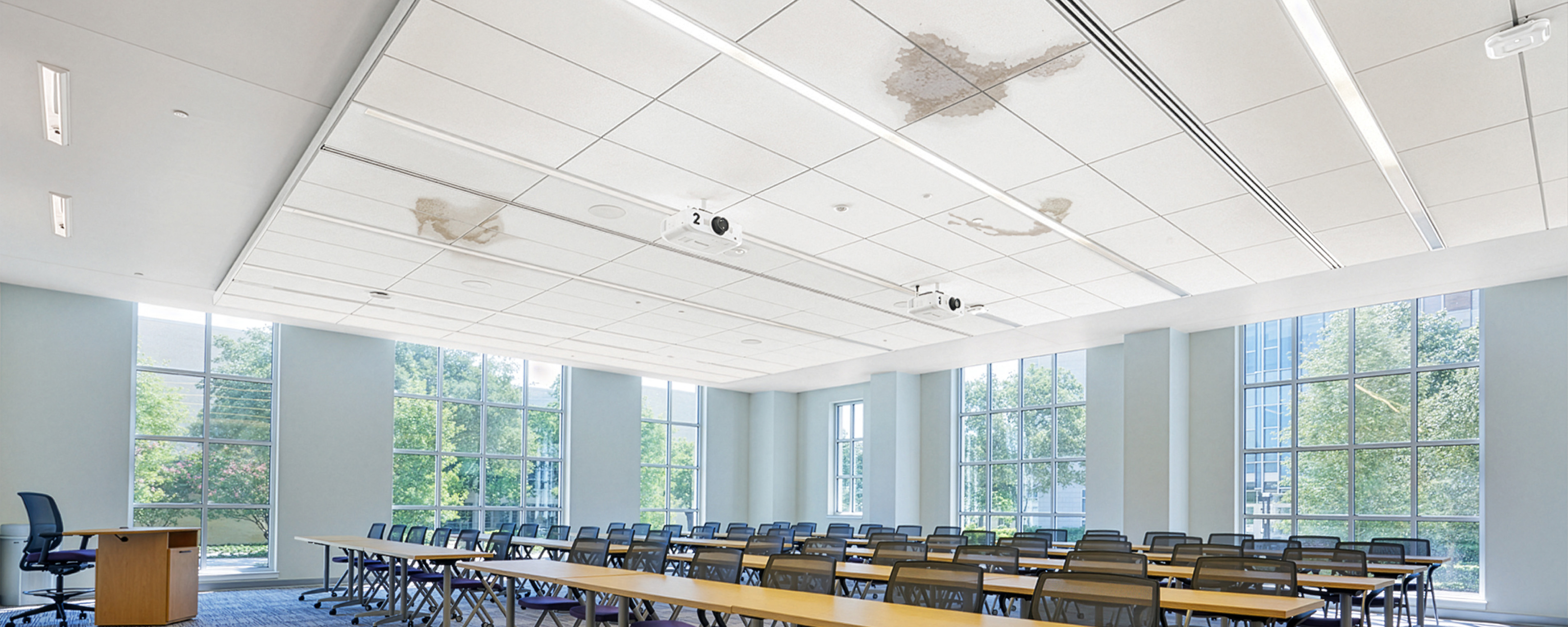
1. Staining and yellowing
Discoloration is rarely just cosmetic.
Yellowed or stained ceiling tiles often point to:
-
Roof leaks
-
HVAC condensation issues
-
Plumbing leaks
-
Long-term moisture intrusion
-
Age-related off-gassing and deterioration
Even if the leak has been repaired, stained tiles typically continue to look damaged and may retain contaminants or odors.
What to look for:
-
Brown or yellow water rings
-
Uneven discoloration
-
Tiles darker than surrounding areas
-
Repeated staining near vents or sprinkler systems
2. Sagging or warping
Ceiling tiles that bow downward or appear uneven have usually absorbed moisture and become structurally compromised.
Once a tile begins sagging, it generally will not return to its original shape.
Continued deterioration can lead to:
-
Tiles slipping from the grid
-
Increased breakage
-
Safety concerns in occupied spaces
-
A visibly neglected appearance
Common causes include:
-
High humidity
-
Roof leaks
-
HVAC system condensation
-
Poor ventilation
-
Long-term age and wear
3. Visible mold or dark spotting
Dark spotting around vents, corners, or moisture-prone areas may indicate mold growth.
Porous mineral fiber ceiling tiles absorb moisture easily, making them difficult to clean once mold develops. In many cases, replacement is the safest and most effective solution.
Warning signs:
-
Black or green spotting
-
Fuzzy growth
-
Persistent discoloration after cleaning
-
Musty smells near affected areas
Facilities such as healthcare buildings, schools, and food service environments should treat visible mold as an immediate maintenance concern.
4. Cracking or crumbling edges
Older ceiling tiles often deteriorate around the edges first, especially in high-traffic areas where tiles are frequently moved for maintenance access.
Damaged edges create:
-
Dust and debris
-
Poor tile fit within the grid
-
Increased breakage during removal
-
An unprofessional appearance
Common problem areas:
-
Hallways
-
Utility corridors
-
Mechanical access points
-
Areas with frequent HVAC servicing
5. Chips and surface damage
Routine maintenance work can take a toll on ceiling systems over time.
Tiles become chipped, scratched, or punctured from:
-
Ladder contact
-
Maintenance access
-
Improper tile removal
-
Lighting or sprinkler repairs
-
General wear and tear
At a certain point, patching or touching up damaged tiles becomes more noticeable than replacement.
If multiple tiles throughout a facility show visible surface damage, replacing sections-or the entire ceiling system-may be more cost-effective and visually consistent.
Performance signs (Harder to see, easier to feel)
Some ceiling tile problems are less visible but still impact occupant comfort, building performance, and overall workplace experience.
1. Increased noise complaints
Acoustic ceiling tiles are designed to absorb sound and reduce echo within commercial spaces.
Over time, however, acoustic performance degrades-especially if tiles have:
-
Been exposed to moisture
-
Been painted over repeatedly
-
Accumulated dust and particulates
-
Aged beyond their intended service life
If occupants begin complaining about:
-
Echoing conference rooms
-
Louder office environments
-
Reduced speech privacy
-
Increased ambient noise
…it may indicate that ceiling tiles are no longer providing effective noise reduction.
2. Rooms feel harder to heat or cool
Suspended ceiling systems help create an insulating air gap that contributes to temperature stability.
When tiles become damaged, warped, or improperly fitted, conditioned air movement can become less efficient.
Potential signs include:
-
Hot or cold spots
-
Uneven room temperatures
-
HVAC systems running longer
-
Increased energy usage
While ceiling tiles are not the sole factor in building efficiency, degraded systems can contribute to broader HVAC performance issues.
3. Musty or stale odor
Persistent odors are often traced back to ceiling tiles that have absorbed:
-
Moisture
-
Dust
-
Smoke residue
-
HVAC particulates
-
Biological contaminants
Over years of HVAC cycling, porous ceiling materials can trap contaminants and release odors back into occupied spaces.
If odor issues persist after HVAC servicing and cleaning, aging ceiling materials may be contributing to the problem.
4. Frequent sick day spikes or air quality complaints
Indoor air quality concerns are increasingly important in commercial buildings.
Degraded ceiling tiles can harbor:
-
Allergens
-
Mold spores
-
Dust accumulation
-
Airborne particulates
Occupants may report:
-
Headaches
-
Allergy symptoms
-
Respiratory irritation
-
General discomfort
While ceiling tiles are only one component of indoor air quality management, visibly degraded or contaminated tiles should not be ignored.
Compliance and liability triggers
In some cases, ceiling tile replacement moves beyond aesthetics or comfort and becomes a compliance requirement.
1. Failed fire rating inspection
Many commercial ceiling systems are part of a fire-rated assembly.
Problems occur when tiles are:
-
Painted over
-
Damaged
-
Replaced with non-matching products
-
Improperly installed
Using non-rated replacement tiles can compromise the integrity of the ceiling system and potentially void its fire rating.
This becomes especially important during:
-
Fire marshal inspections
-
Tenant improvements
-
Insurance evaluations
-
Code compliance reviews
If your building has undergone years of patchwork repairs, it may be worth verifying that all replacement tiles still meet required fire-rating standards.
2. Healthcare or food service audits
Facilities in healthcare, food service, and laboratory settings face stricter cleanliness and infection-control standards.
Organizations such as:
-
The Joint Commission
-
Local health departments
-
State licensing agencies
…often flag visibly damaged, stained, or mold-affected ceiling tiles during inspections.
Common issues include:
-
Water staining
-
Surface deterioration
-
Gaps around fixtures
-
Mold or particulate buildup
In regulated environments, ceiling tile replacement may be necessary to maintain compliance.
3. Insurance or property inspection findings
Deferred maintenance can raise concerns during insurance or property inspections.
Some carriers or inspectors may identify damaged ceilings as indicators of:
-
Ongoing moisture intrusion
-
Poor facility maintenance
-
Increased liability exposure
-
Potential mold risks
Addressing ceiling issues proactively can help reduce future disputes during claims, lease negotiations, or property transactions.
4. Asbestos-era tiles still in place
Buildings constructed before the mid-1980s may still contain original ceiling tiles manufactured with asbestos-containing materials.
Before any renovation, demolition, or large-scale tile replacement, facilities should evaluate whether asbestos testing or abatement is required.
Potential warning signs include:
-
Original tiles in older buildings
-
Brittle or deteriorating materials
-
Lack of renovation records
Always consult licensed asbestos professionals before disturbing suspect materials.
Commercial ceiling tile walkthrough checklist

Use the following checklist during routine inspections, maintenance walkthroughs, lease turnovers, or pre-audit reviews.
Ceiling tile inspection checklist
-
Any tiles visibly stained, yellowed, or discolored?
-
Any sagging, warping, or bowing?
-
Visible mold, dark spots, or fuzzy growth?
-
Crumbling or cracked edges?
-
Tiles previously painted (check fire rating compliance)?
-
Building constructed before the mid-1980s (asbestos risk)?
-
Occupant complaints about noise, odor, or air quality?
-
Recent water event, leak, flood, or HVAC condensation?
-
Upcoming inspection, audit, or lease renewal?
Recommended inspection frequency
For most commercial facilities, ceiling inspections should occur:
-
Quarterly in standard office environments
-
Monthly in healthcare or food service facilities
-
Immediately after any water intrusion event
-
Prior to major inspections or tenant turnover
Documenting issues early can help prioritize repairs, budget replacements, and reduce long-term maintenance costs.
Final thoughts
Commercial ceiling tiles do more than improve appearance. They contribute to acoustics, indoor air quality, thermal efficiency, and regulatory compliance.
Visible damage, moisture issues, occupant complaints, or failed inspections are all signs that replacement may be necessary.
By using a structured inspection checklist and addressing issues early, facility managers can avoid larger repair costs, improve occupant experience, and maintain a safer, more professional environment.
If multiple warning signs appear throughout your building, it may be time to evaluate whether spot replacement is enough-or if a larger ceiling system upgrade makes more financial and operational sense.
 Thanks for subscribing!


 Buy 3, get 1 free


