






 My Account

7 Ways to Reduce Workplace Noise | Acoustic Ceiling Tiles
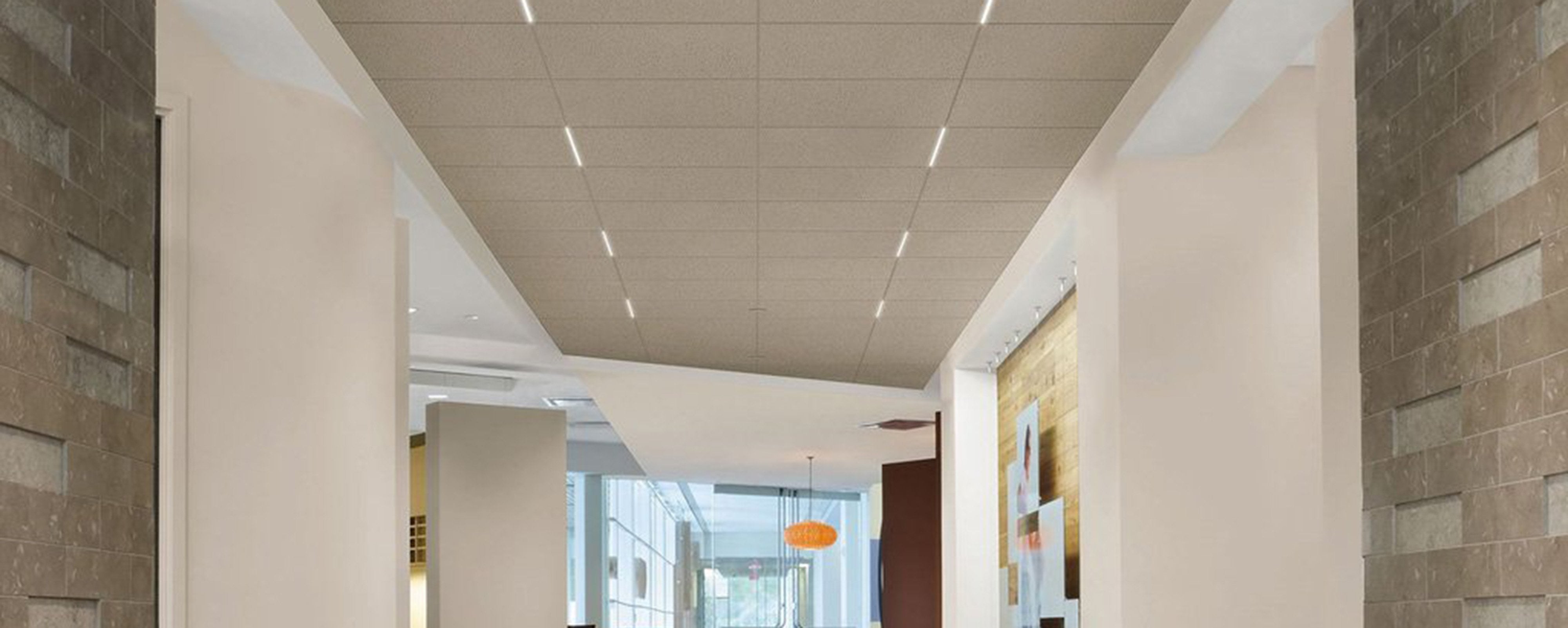
Workplace noise can be incredibly distracting, leading to a decline in focus and productivity that affects employee performance and client satisfaction. Maintaining acceptable noise levels in the workplace isn’t always easy, but implementing a few effective strategies will reduce noise and create a more comfortable environment for employees and clients alike.
We have a range of strategies that you can employ to reduce noise in the office workplace, like installing acoustic ceiling tiles, offering noise-canceling headphones, incorporating partitions to separate shared spaces, and designing a smart layout.
Implementing one or more of these strategies can reduce the stress of being in a noisy workplace by tackling the source of the problem: the noise.
1. Outfit the ceiling with acoustic ceiling tiles

Installing a suspended ceiling has a host of benefits, but in a noisy office, the most desirable one is the ability of the ceiling tiles to absorb and block sound. The right ceiling tiles will create a more comfortable environment, helping your team concentrate and improve their productivity.
ULTIMA Lay-In and Tegular ceiling tiles offer the best in sound absorption and sound blocking capabilities, providing superior acoustic performance. With three different edge profiles to choose from, you’ll find the style you want with the acoustic performance you need.
2. Design a smart layout

Reducing excessive noise in the workplace is often due to the office layout. Large open spaces with smooth hard surfaces give sound endless surfaces to bounce off of, leading to a noisy workplace that hinders productivity.
But creating enclosed areas that function as private offices, conference rooms, collaboration spaces or meeting rooms helps to lower the overall workplace noise levels by keeping them contained within smaller spaces.
Also important when creating these enclosed spaces is to ensure sound control is in place so sound can’t travel between areas. One way to do this is to use acoustic tiles.
3. Prevent sound transmission between adjacent rooms with acoustic tiles

Even a private office isn’t exempt from unwanted sound. Recent building trends often separate offices with a partial wall, a demountable partition or a full-height wall with unsealed penetrations, all of which let in conversations from adjacent rooms.
This leads to a space that doesn’t prevent sound transfer in the workplace. Rather than risk a breach of confidentiality, install ceiling tiles — like CALLA PrivAssure — that are designed to reduce the most noise in the office workplace.
4. Use partition panels to separate a shared space

Due to the popularity of open offices (where walls are limited in order to encourage collaboration), private spaces can be hard to come by. In this case, the best noise reduction strategies are stylish and functional.
INFUSIONS Resilient Partitions are the perfect blend of style and function that will transform a shared space into semi-private work areas.
Not only are these partitions beautiful, but they are easy to clean and available in a variety of patterns and colors to perfectly complement your office aesthetic while reducing noise in the workplace.
5. Install noise reduction flooring

Two main sources of noise in a workplace are impact noise (i.e. thudding footsteps, high heels or dropped items) and airborne noise (i.e. conversations, typing and ringing phones).
Acoustic flooring reduces both types of noise in the office workplace and comes in a variety of materials such as carpet, cork flooring, vinyl tiles and wood-plastic composite (WPC) flooring, which all help to prevent impact noise from footfall, pushcarts, dropped items and airborne sound.
6. Noise canceling headphones

They’re not a structural upgrade, but noise-canceling headphones can make a noisy work environment more manageable.
Even though acoustic ceiling tiles, flooring and partitions can absorb or block sound from traveling through the space, noise-canceling headphones will help block out the noises that simply can’t be avoided.
7. Manage sound in a large open space

Creating acceptable working noise levels in a large space is a challenge. For an exposed structure, INVISACOUSTICS ceiling panels offer up to 75% sound absorption, making them perfect for large open-ceiling spaces where reverberations can quickly become overwhelming.
You can also add upholstered surfaces, such as area rugs, chairs and floor poufs, to help disrupt and absorb leftover sound as it travels through the large space.
Find the right noise reduction strategy with kanopi
Finding the right strategy to reduce noise in the workplace depends on your space, typical noise levels, budget and design needs. Our experts will help you work through your unique needs to help you find the right system. From ceiling tiles to wall protection to partitions, you’ll find the quiet you need with Kanopi.
Contact us today today to begin creating a quieter space.
Ceiling tile FAQ's
Do acoustic ceiling tiles work?
Yes. Acoustic ceiling tiles can absorb the sound from within a space or block sound from entering and leaving, but the best ones do both!
Can I put soundproof tiles on the ceiling?
Yes. If noise is a concern or an issue in a space, soundproof ceiling tiles are one of the best solutions!
How much do acoustic ceiling tiles cost?
Acoustic ceiling tiles and panels range from $1/sq ft up to $14/sq ft. The higher cost items provide better soundproofing and sound absorption.
How long does acoustic ceiling tile last?
All ceiling tiles should be changed every 10 years to ensure maximum performance. This includes acoustic ceiling tiles.
How do you install acoustic ceiling tiles?
For most DIY-ers installing a drop ceiling is something that can be done quickly. Some of our products require better technical skills, more time planning and measuring, and more tools, like metal shears. Be sure to read our how-to install drop ceiling guide.
What causes noise problems in the workplace?
Workplace noise often comes from conversations, ringing phones, equipment, HVAC systems, and open layouts. Without proper sound control, these noises can create distractions, stress, and communication issues.
Where should acoustic ceiling tiles be installed?
Acoustic ceiling tiles are ideal for offices, conference rooms, call centers, classrooms, healthcare settings, and any other spaces where reducing noise is important for productivity and comfort.
How effective are acoustic ceiling tiles at reducing noise?
The effectiveness of acoustic ceiling tiles depends on their Noise Reduction Coefficient (NRC) rating. Higher NRC ratings (closer to 1.0) indicate better sound absorption and noise reduction performance.
Can acoustic ceiling tiles improve workplace productivity?
Yes, reducing noise in the workplace leads to fewer distractions, better concentration, improved communication, and higher overall employee satisfaction, all of which contribute to better productivity.
Are there different styles of acoustic ceiling tiles?
Yes, acoustic tiles come in a wide range of styles, textures, and colors, so you can find options that meet both your acoustic needs and your aesthetic preferences.
How do I choose the right acoustic ceiling tile for my workplace?
Consider factors such as the NRC rating, tile style, room function, ceiling height, and budget. It's important to balance acoustic performance with visual appeal to create a functional and attractive space.
How long do acoustic ceiling tiles last?
High-quality acoustic ceiling tiles can last 10 to 20 years or more with proper maintenance. Some tiles are also resistant to sagging, humidity, and mold, which extends their lifespan even further.
How do you maintain acoustic ceiling tiles?
Acoustic tiles require minimal maintenance. Regular dusting, occasional spot cleaning, and keeping humidity levels controlled are usually enough to keep them looking and performing their best.
Can acoustic ceiling tiles be used in open office layouts?
Absolutely. Acoustic ceiling tiles are an effective way to manage sound in open office environments, where noise tends to travel easily due to the lack of walls and partitions.
-
Posted in
Acoustic Education, drop ceiling
 Thanks for subscribing!


 Buy 3, get 1 free


